CoinPoker vs SolPoker: What Is the Best Crypto Poker Site?
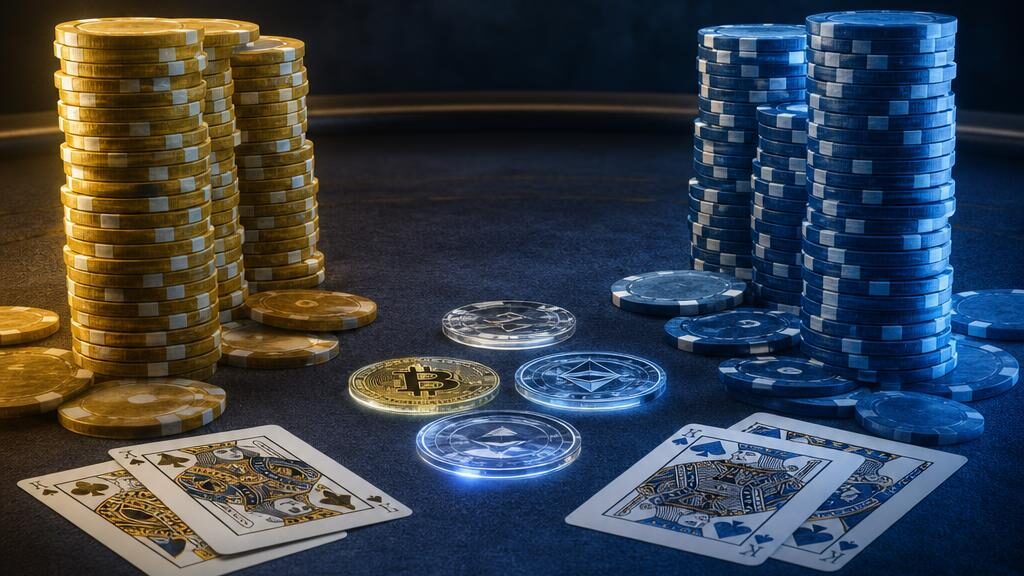
CoinPoker and SolPoker.com are two crypto poker rooms built around a similar idea: play real-money poker using cryptocurrency instead of traditional banking.
The experience is quite different, though. CoinPoker is a more established crypto poker platform with a broad selection of games and an established rake and rewards system. SolPoker takes a more crypto-native approach, focusing on zero rake, no KYC and on-chain poker.
CoinPoker vs SolPoker.com
| Feature | CoinPoker | SolPoker |
|---|---|---|
| Cash game rake | 5% | 0% |
| KYC | May be required | No KYC |
| Personal information | May be requested | Not required for normal use |
| Poker | Texas Hold’em, PLO and more | Texas Hold’em & PLO |
| Crypto withdrawals | Yes | Yes |
| Withdrawal limit | $25K per transaction, higher withdrawals possible | $750K rolling 24-hour limit |
| Blockchain verification | Crypto payments | On-chain poker + cryptographic verification |
| Social gameplay | Yes | Yes |
CoinPoker’s official rake guide currently lists a 5% rake for cash games, while SolPoker operates a zero-rake model.
CoinPoker
CoinPoker has been around as a crypto-focused poker platform and offers a wider selection of poker formats, including Texas Hold’em, Pot-Limit Omaha, 5-Card PLO and 6-Card PLO. Its platform also includes tournaments and other poker formats.
The main difference is its traditional poker-room business model. CoinPoker charges rake on cash games and tournament fees, with its current published cash-game rake listed at 5%. It also has a rewards system that returns part of the fees to players.
CoinPoker supports several cryptocurrencies for deposits and withdrawals. Its current cashier documentation lists USDT, USDC and BTC withdrawals, with standard crypto withdrawals capped at 25,000 USDT per transaction and larger withdrawals available through its VIP/support process.
KYC is another important difference. CoinPoker’s terms state that withdrawals can be subject to internal review, compliance checks and KYC, and additional documentation may be requested.
SolPoker
SolPoker is built around a different model.
The poker room offers zero rake, with the platform using an advertising and sponsor-led model instead of taking the traditional percentage of poker pots. That means the poker tables themselves don’t have the normal cash-game rake found on conventional poker sites.
SolPoker also takes a different approach to privacy. There is no KYC and no personal information required for normal play. Players can sign in with Google or a crypto wallet, deposit USDC and start playing without uploading identification documents.
The withdrawal setup is also designed for larger crypto players. SolPoker states that withdrawals go directly back to the player’s wallet, with no holding period or withdrawal approval for amounts within its $750,000 rolling daily limit.
The Poker Experience
This is where the comparison becomes less about specifications and more about what kind of poker room you actually want.
CoinPoker offers a broad selection of established poker formats and stakes. It is closer to the traditional online poker-room model, just with cryptocurrency integrated into the platform.
SolPoker is more focused on a crypto-native experience. The games are designed to be loose and action-oriented, with an emphasis on table interaction and social gameplay. The platform also says that its cryptographic system means even the server cannot see a player’s cards.
For players who care about privacy and blockchain verification, SolPoker’s approach is particularly different. Every hand is designed to be verifiable on-chain, while hole cards remain encrypted and private.
Zero Rake vs Rakeback

This is one of the clearest differences between the two platforms.
CoinPoker charges rake and then uses its CoinRewards system to return part of those fees to players.
SolPoker doesn’t charge the rake in the first place. Its advertising and sponsor-led model is intended to fund the platform without taking a percentage from poker pots.
For someone playing a large number of hands, this creates a straightforward distinction: CoinPoker uses rake plus rewards, while SolPoker uses zero rake funded through advertising and sponsorships.
Withdrawals
Both platforms support crypto withdrawals, but their systems work differently.
CoinPoker currently lists a 25,000 USDT maximum per standard crypto withdrawal transaction, while its documentation says players can contact VIP or support for higher withdrawals. Its terms also allow security and compliance checks before withdrawals are processed.
SolPoker states that players can withdraw directly to their own wallet within its rolling $750,000 per 24-hour limit, without a holding period or withdrawal approval for amounts within that limit.
No KYC Poker
If avoiding KYC is important, there is a significant difference.
SolPoker explicitly operates without KYC for normal registration and play. CoinPoker’s terms, meanwhile, allow the platform to request identification and perform compliance checks, particularly around withdrawals.
That makes the two platforms quite different for players specifically searching for no-KYC crypto poker.
CoinPoker vs SolPoker: Which One Fits You?
The two rooms are aimed at somewhat different types of crypto poker players.
CoinPoker offers a broader traditional poker-room experience, multiple poker variants, established rakeback/rewards and a larger conventional poker ecosystem.
SolPoker focuses more heavily on the crypto-native side of poker: zero rake through an advertising and sponsor-led model, no KYC, large crypto cashouts and on-chain, cryptographically verifiable dealing.
For someone researching crypto poker, Bitcoin poker, no-KYC poker or zero-rake poker, the important differences are therefore not just the number of tables. Rake structure, privacy, withdrawal procedures and how the actual games feel can all matter when choosing between the two.